The home page


We hope you find this information of interest, please feel free to ask us about anything not covered here.

What stages are involved in a climbing wall project ?
1 Research ... user needs, location and budget constraints
2 Proposal ... design and quotation
3 Specifications ... engineering, climbing wall and facility structure
4 Building Consent ... if impacting on building structure
5 Installation ... carried out to EN 12572:1999

What equipment is normally included as standard ?
Bolt-on holds and initial routesetting
Climbing harnesses
Floor mats

What optional extra equipment is available ?
Climbing ropes, belay devices, ground anchor systems and climbing shoes

What are some indicative costs for a climbing wall project ?
The following figures may be helpful but please note that they are 'ballpark' only ...
There are many variables ... existing building structure, height and specification of the wall (eg. top rope or lead climbing), climbing equipment requirement, geographical location of the site.

Larger Walls with 8-10 ropes
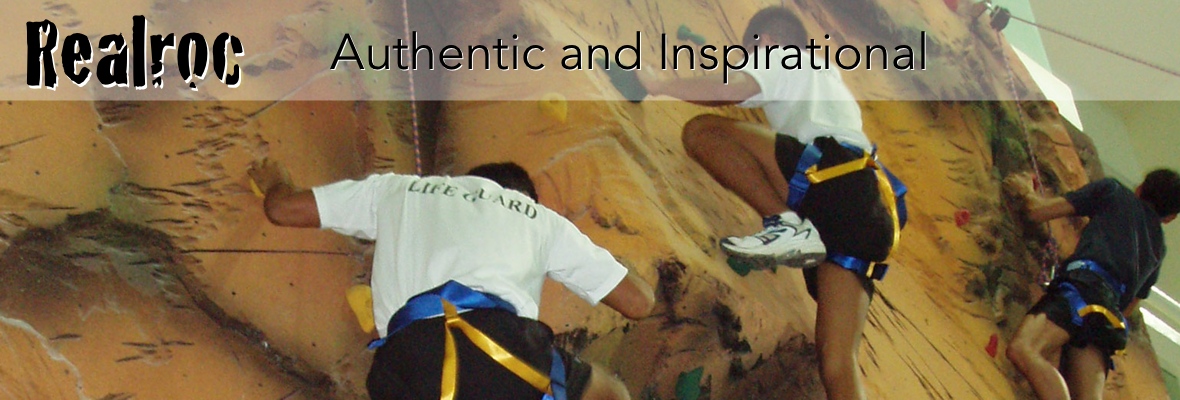
RealRoc / ContourRoc  $150k - $200k
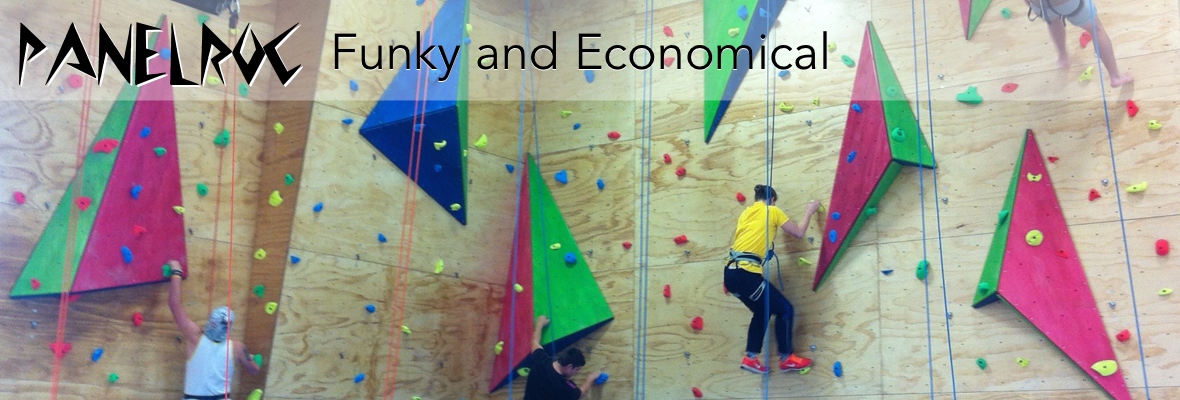
PanelRoc  $120k - $150k

Smaller Walls with 6-8 ropes
RealRoc / ContourRoc  $90k - $140k
PanelRoc  $65k - $110k

Bouldering Walls of 8m in width
RealRoc / ContourRoc  $40k - $60k

What are the Climbing Company payment terms ?
25% ... On confirmation of contract
25% ... On arrival of installation team on site
40% ... On practical completion ie. proof tested
10% ... Payable on 20th month following completion

What standards apply to climbing walls ?
Construction:  There is currently no formally instituted standard for climbing wall construction in New Zealand.  However the accepted standard is EN 12572:1999 and this is the standard which our Engineers specify and conform to. Local Authority requirements are also applied as applicable.

Risk Management:  Climbing wall activities fall under the Health & Safety in Employment Act and risk management is a key responsibility of any climbing wall operator.  We can provide practical advice and templates to aid the development of robust risk management systems.

Personnel:  Qualified or well experienced supervisors are required to manage and deliver safe and well designed programmes at climbing facilities.  NZOIA (New Zealand Outdoor Instructors Association) have developed climbing industry standards and levels of certification.  Visit their website for details ... www.nzoia.org.nz

What types of climbing take place indoors ?
Top Rope Climbing:  Climbing while wearing a harness which is attached to a rope which goes through an anchor point at the top of the wall and back down to the ground where a Belayer is controlling the safety of the climber via a belay device.

Lead Climbing:  Climbing while wearing a harness but where the rope goes from the climber directly to the Belayer. As the climber progresses up the wall, they clip the rope into sequential Quickdraws thus safeguarding themselves.

Traversing:  Climbing sideways or diagonally as opposed to upwards.

Bouldering:  Climbing unroped to a height where it is still safe to jump off.

Abseiling: A controlled descent by sliding down a rope using an abseil device.

Where can I find a full glossary of climbing terms ?
There are many websites where this information can be found ... this is one

http://www.indoorclimbingwalls.co.uk/glossary.htm#top

           Copyright The Climbing Company 2006                                                                                                             A Division of Sheer Adventure Ltd